


Acerca de
Toxins 101
What is a toxin?
Currently, there are over 80,000 to 100,000+ different toxins known to cause harm to the body.
Toxins are substances created by plants, animals, and microorganisms that are poisonous (toxic) to humans. Toxins may also include some medicines that are helpful in small doses but poisonous in large amounts. While our bodies possess the natural ability to detoxify, the amount of exposure and the accumulation of toxins can overwhelm this system, providing a favorable environment for pathogens to thrive.
Toxicity is the ability of a substance to cause harmful health effects. These effects can impact a single cell, a group of cells, an organ system, or the entire body. A toxic effect may be visible damage or a decrease in performance or function, measurable only by a test.

.png)
The types of toxins we are exposed too
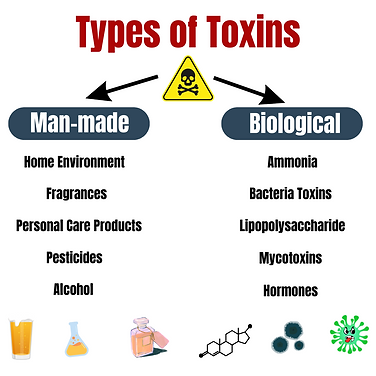
We can divide toxins into two groups: man-made or biological. These toxins can either be exotoxins or endotoxins, which means:
Exotoxin = Environmental (outside of the body)
Endotoxin = Generated inside body
4 Main Areas of Exposure

Water
Heavy Metals
Pesticides
Pharmaceuticals
Chlorine
Fluoride
Plastics

Food
Herbicides/Pesticides
GMOs
Artificial Sweeteners
Gums
Preservatives
BPA Plastics

Air
Mycotoxins
Dust
VOCs
Gasses
Fragrances

Hygiene/Cleaners
Phalates
Heavy Metals
Aluminum
Fragrances
How toxins negatively impact our health
Toxins affect the body in many different ways, which vary depending on the type of toxin.
-
Toxins can mimic hormones (upregulated/downregulated).
-
Over burden our detoxification pathways
-
They can cause DNA damage
-
They disrupted Our Microbiome
-
They can damage Mitochondria
-
They are impacted by EMF (electromagnetic frequencies).
Depending on the type of toxin and where in the body they build up, they can cause an array of symptoms. Look at picture ->
It’s impossible to be completely toxin-free in today’s world; however, as consumers, we should be mindful, aware, and informed to make better choices for our health.

What can we do!
First and foremost, we must remove or limit exposure from specific sources mentioned above and choose cleaner solutions. Below are ways to remove and limit exposure from various sources.
So, how do you know which toxins are burdening your system? Well, there are tests on the market now that can tell you the level of toxic load in your body, which we can test for.
Air: HEPA Air filter System, Dehumidifier, Open windows, Spend time in nature
Food: Organic/biodynamic pasture raised, wash fruits & vegetables,
Water: filtered water systems - berkley, Aquatru, distilled water
Personal Hygiene: Clean ingredients, use EWG.org for resources, BPA free, Phalate free, aluminum,
House Hold Products: Fragrance free, dyes, use EWG.org for resources
Once we’ve limited our exposure, we need to focus on opening up our drainage pathways before any sort of detox. If our drainage pathways are blocked, toxins will be removed and reabsorbed, causing more harm. (learn more about drainage here).

Detoxification has been increasingly popular, and it is not just a juice cleanse, a period of fasting, water fasting, or any cleansing kit you find in your local health food store. Detoxing is a multi-level process, focusing on increasing cellular energy, drainage, pathogens, and specific binders, which is crucial. Some people might say, “My body does it naturally,” and yes, that’s true; however, depending on how you live your life, your environment, lifestyle, and habits, these can ultimately cause your body to become overburdened and sluggish, causing many organs and organ systems to begin to not function normally.